
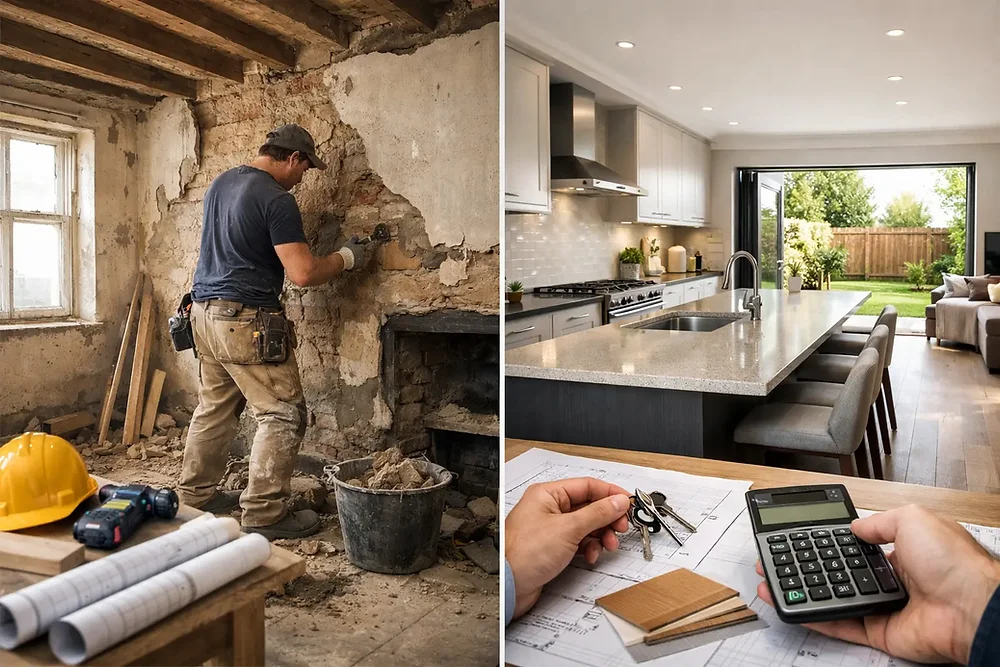
A Guide to House Renovation Costs in 2026
A renovation budget can change quickly once walls are opened, old fittings are removed or the true condition of a property becomes clear. A useful guide to house renovation costs should therefore do more than offer a single headline figure. It should help you understand what is included, what may sit outside the initial allowance and how professional planning protects both the finish and the budget.
Renovation budget checklist
- Define the scope room by room before relying on headline cost estimates.
- Separate essential repairs from optional upgrades and premium finishes.
- Allow contingency for defects uncovered during strip-out.
- Confirm what labour, materials, waste removal and specialist work are included.
- Use a site survey and written specification to turn an early budget into a realistic quotation.
For homeowners, landlords and property investors across Wolverhampton and the West Midlands, the right investment depends on the property, its current condition and the standard you want to achieve. A rental refresh has different priorities from a family home renovation or a commercial refurbishment, but each benefits from a detailed scope of work, clear specifications and realistic contingency planning.
What does a house renovation typically cost?
House renovation costs vary significantly. A straightforward decorative refurbishment of a two or three-bedroom property may run into several thousand pounds, while a full renovation involving a new kitchen, bathroom, replastering, flooring, electrics and structural alterations can move into the tens of thousands.
As a broad guide, a light refurbishment may include painting, selected repairs, new floor finishes and modest upgrades to kitchens or bathrooms. A medium renovation often involves several trades, such as plasterers, electricians, plumbers, tilers, decorators and flooring installers. A full-property renovation may include strip-out work, complete kitchen and bathroom replacement, substantial repair work, new internal finishes and changes to the layout.
The size of the house is only one factor. A compact period terrace with damp, outdated wiring and uneven walls may cost more per square metre to renovate than a larger, well-maintained modern house. Equally, a property that is empty and ready for work is often more efficient to refurbish than one that must remain occupied throughout the project.
The main factors that affect renovation costs
A reliable quotation starts with a proper site survey. Until a contractor has seen the rooms, measured the spaces and discussed your intended finish, any figure is only a preliminary estimate.
The condition behind the existing finishes
The visible condition of a room does not always tell the full story. Removing old kitchen units may reveal damaged plaster, poor pipework or a floor that needs levelling. In bathrooms, water damage, failed sealant, rotten subfloors or inadequate ventilation can require remedial work before new tiles and fittings are installed.
These items are not optional extras if a durable finish is the goal. Addressing them properly helps prevent new work being compromised soon after completion. This is why an allowance for unforeseen work is sensible, particularly in older properties or homes that have been altered several times.
The scale and complexity of the work
Replacing like for like is usually more straightforward than moving services or changing a layout. Keeping a kitchen sink in its existing position, for example, may reduce plumbing alterations. Moving it across the room can involve new pipe runs, floor access and making good afterwards.
The same principle applies to bathrooms, radiators, door openings and electrical points. Complex layouts can be worthwhile where they improve how a house works, but they need to be allowed for honestly at the planning stage. A well-designed renovation is not necessarily the cheapest option, yet it should provide clear long-term value.
Materials, fixtures and finish level
There is a considerable price range in kitchens, sanitaryware, tiles, flooring, taps, lighting and internal doors. The labour to fit a large-format porcelain tile, for example, can differ from fitting a basic ceramic tile because of cutting, setting-out and substrate preparation. Quality materials can also require more care during installation.
It is helpful to distinguish between the contractor’s labour and materials, and the products you choose yourself or from an agreed supplier. A transparent quotation should make this clear. If certain items are provisional because final selections have not been made, you should know the allowance and how any difference will be managed.
Building regulations, safety and specialist work
Electrical alterations, gas work, structural changes and some drainage work may require appropriately qualified tradespeople, inspection or certification. Depending on the project, building control approval may also be needed. These costs should not be treated as an afterthought.
Where a house has older construction, asbestos surveys or specialist removal may be necessary before intrusive work begins. A professional contractor will identify likely requirements early and explain the next steps rather than allowing avoidable delays to arise mid-project.
A practical guide to house renovation costs by room
Room-by-room budgets are useful for early planning, but they are only meaningful when the scope is clear. A bathroom refurbishment could mean replacing a basin and toilet, or it could mean stripping the room back, altering plumbing, waterproofing the shower area, tiling, installing lighting and fitting new ventilation. Those are very different projects.
Kitchen renovation budgets
Kitchen costs are shaped by the number of units, worktop choice, appliance specification, plumbing and electrical changes, wall finishes and flooring. Preparation is often the hidden part of the job: removing the old kitchen, repairing walls, relocating sockets, levelling floors and preparing surfaces for tiling or decorating.
When comparing options, consider how the kitchen will be used. A landlord may prioritise hard-wearing, easy-to-maintain finishes, while a homeowner may choose upgraded storage, durable worktops and a more tailored layout. Neither approach is automatically right. The best choice matches the property, the intended use and the available budget.
Bathroom refurbishment budgets
Bathrooms require careful coordination because several trades work in a relatively small space. Costs can include strip-out, first-fix plumbing and electrics, wall or floor preparation, waterproofing, tiling, sanitaryware installation, second-fix services, decorating and finishing details.
Cutting costs by skipping preparation is rarely wise in a bathroom. Correctly installed waterproofing, sound plumbing connections and effective extraction all support the longevity of the room. If you are choosing between a lower upfront figure and a detailed specification, check exactly what each contractor has included before deciding.
Whole-house decoration, plastering and flooring
Fresh decoration can transform a property, particularly after electrical or plumbing work, but the finish depends on surface preparation. Filling cracks, repairing damaged areas, treating stains, sanding woodwork and applying suitable primers all take time. A repaint price that seems unusually low may not allow for these stages.
Plastering and flooring are similar. Uneven walls may need more than a quick skim, while floors may require repairs, levelling compound or moisture checks before new coverings can be laid. These preparatory works are what allow the final surface to look right and perform well.
Set a contingency before work starts
A contingency is not an invitation to overspend. It is a controlled allowance for work that cannot be confirmed until the project is underway. For many renovations, setting aside around 10 to 15 per cent of the project value is a sensible starting point. Properties in poor condition, older houses and projects involving layout changes may need more.
Keep this amount separate from your wish-list budget. If the contingency is not required, you can retain it or use it for planned upgrades later. If an issue arises, ask for the cause, proposed solution, cost and effect on the programme to be explained clearly before additional work proceeds.
How to compare renovation quotations properly
The cheapest quotation is not always the lowest final cost. A quote can appear competitive because it omits preparation, waste removal, protection, certification, materials, project management or making good after each trade. Those omissions can create unexpected costs and confusion once work has begun.
Ask each contractor to quote against the same written scope wherever possible. The quotation should identify the work included, material allowances, exclusions, anticipated timescales and payment stages. It should also explain how variations will be approved if you change the design or hidden defects are found.
A dependable contractor will be willing to discuss the detail. This is particularly valuable on multi-trade projects, where the sequence of work matters. Coordinating strip-out, first-fix services, plastering, fitting, tiling, flooring and decoration carefully helps reduce downtime and protects completed finishes from damage.
Spend where it adds lasting value
Some decisions are easier to revise later than others. Decorative accessories, handles and light fittings can often be updated with limited disruption. Plumbing routes, electrical capacity, floor preparation, ventilation, waterproofing and structural repairs are much harder to revisit once the room is complete.
For rental properties, durable finishes and easy maintenance may offer the strongest return. For owner-occupied homes, investing in a layout that improves daily life can be equally valuable. In either case, a project should be designed around practical use rather than short-lived trends.
Ro Maintenance provides professionally managed renovation and refurbishment work across Wolverhampton and the West Midlands, coordinating skilled trades with clear communication from site survey to completion. Request a free quotation or book a site survey once you have a clear idea of your priorities, and use that conversation to turn an early budget into a properly costed plan.