


Expert External Wall Painting for Your West Midlands Home
- Binon Sellahewa
- Jul 16, 2025
- 17 min read

A professional external wall painting service does far more than just give your home a facelift; it's a vital investment in your property's future health and value. At Ro Maintenance, we see it as your home's first line of defence against the elements, shielding the very structure from harm and forming a key part of any successful property maintenance strategy in the West Midlands.
Why Quality Exterior Painting Is a Smart Home Investment
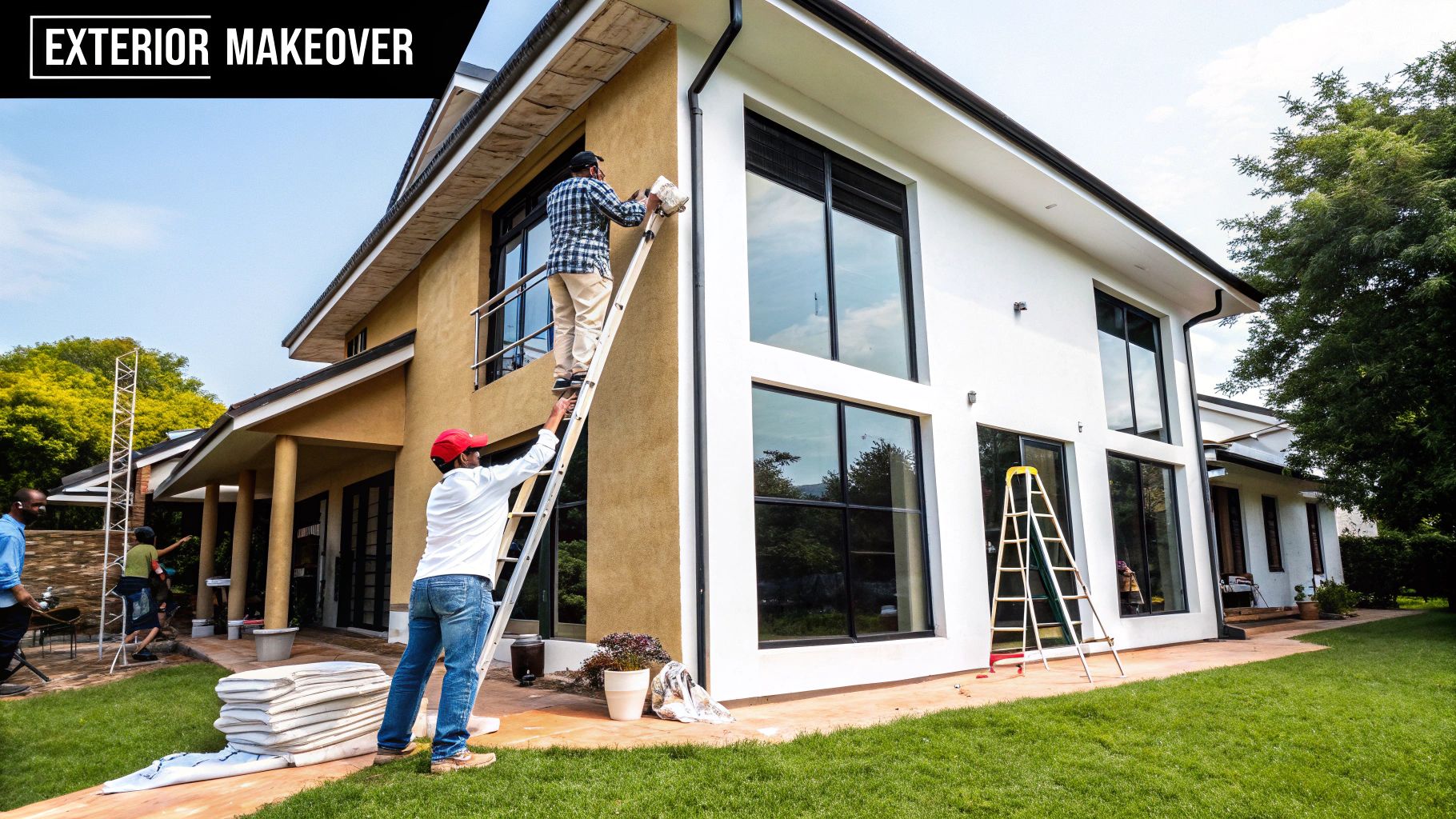
A fresh coat of paint is one of the most effective updates you can make, but the real benefits go much deeper than appearances. For any homeowner in the West Midlands, a top-quality paint job is an essential part of property maintenance, especially when battling our region's notoriously damp and unpredictable weather. Our focus on reliability and quality ensures your satisfaction.
Your exterior walls are constantly under attack. Porous materials like brick and render can slowly absorb moisture, which can lead to some serious headaches—penetrating damp, crumbling bricks (spalling), and even mould growth inside your home. A professional external paint job creates a resilient, weather-resistant barrier, stopping water in its tracks and saving you a fortune on expensive structural repairs later on.
A Cornerstone of Successful House Renovation
When you're planning a full house renovation in Wolverhampton, it’s easy to get caught up in the big interior jobs, like a new kitchen or a modern bathroom. While those are brilliant upgrades, the exterior is what makes the first impression and ties the whole project together. A tired, peeling, or weather-beaten façade can instantly undermine even the most beautiful interior, from brand-new flooring to a complete bathroom renovation.
That's why integrating external painting into your renovation plan is so important. It ensures a complete, cohesive transformation from the outside in. A freshly painted exterior tells everyone, from visitors to potential buyers, that the property has been meticulously cared for, reflecting the quality of the work inside.
A well-executed paint job isn't just a cosmetic touch-up. It's proactive maintenance that safeguards your home’s structure and can significantly boost its market value.
Real-World Value and Protection
Picture a classic terraced house in Dudley with its original, but faded, brickwork. A professional clean and a coat of breathable masonry paint doesn't just bring it back to life; it protects the historic brick from further decay. The same goes for a modern rendered home—a fresh coat of paint can seal tiny hairline cracks before they turn into major problems. These aren't just cosmetic fixes; they are fundamental property maintenance tasks that prevent bigger, costlier issues down the line.
The demand for this kind of work is clear. The UK's painting industry has generated revenues of around £4.4 billion over the last five years, showing just how many property owners rely on professionals. While the pandemic caused a sharp 17.1% drop in sales during 2020–21, a government focus on expanding the housing supply has kept skilled painters in demand.
Ultimately, putting your home in the hands of a reliable team for your external painting provides peace of mind. You can rest easy knowing your home isn't just beautiful, but properly protected for years. For more in-depth advice, have a look at our guide on [the art of exterior maintenance and painting tips for a stunning home](https://www.romaintenance.co.uk/post/the-art-of-exterior-maintenance-painting-tips-for-a-stunning-home).
Choosing the Right Materials for a Lasting Finish
When it comes to painting your home’s exterior, the materials you choose are everything. This isn't just about picking a nice colour; it's about selecting a protective shield that can stand up to the unpredictable West Midlands weather. The right paint and primer will make the difference between a job that lasts a couple of years and one that looks great and protects your home for a decade or more.
Let’s be honest, the world of exterior paints can feel a bit overwhelming at first. But once you get a handle on the basics, you'll be able to have a much more productive conversation with your contractor and make a choice you feel confident in. Our solution-focused approach ensures you get the best product for your specific needs.
Getting to Grips with Your Paint Options
For most properties in our area, a good quality masonry paint is the way to go. These are engineered specifically to bond with common exterior surfaces like brick, render, and stone, creating a tough coating that still has a bit of flex.
Smooth Masonry Paint: This is by far the most common choice, and for good reason. It gives a clean, modern look that’s also a breeze to keep clean. It’s perfect for newer homes or if you're aiming for a sleek, uniform finish.
Textured Masonry Paint: Got a few minor imperfections or hairline cracks in your render? A textured paint is your best friend. The subtle texture does a brilliant job of hiding those little flaws, giving you a more forgiving and really durable finish.
Limewash: If you live in an older, period property—especially one with traditional lime render—it's vital to use a breathable paint like limewash. Modern paints can trap moisture inside old walls, leading to serious damp problems. Limewash lets the building breathe naturally, just as it was designed to.
The paint itself is often the biggest slice of the budget, which is why getting this choice right from the very beginning is so crucial.
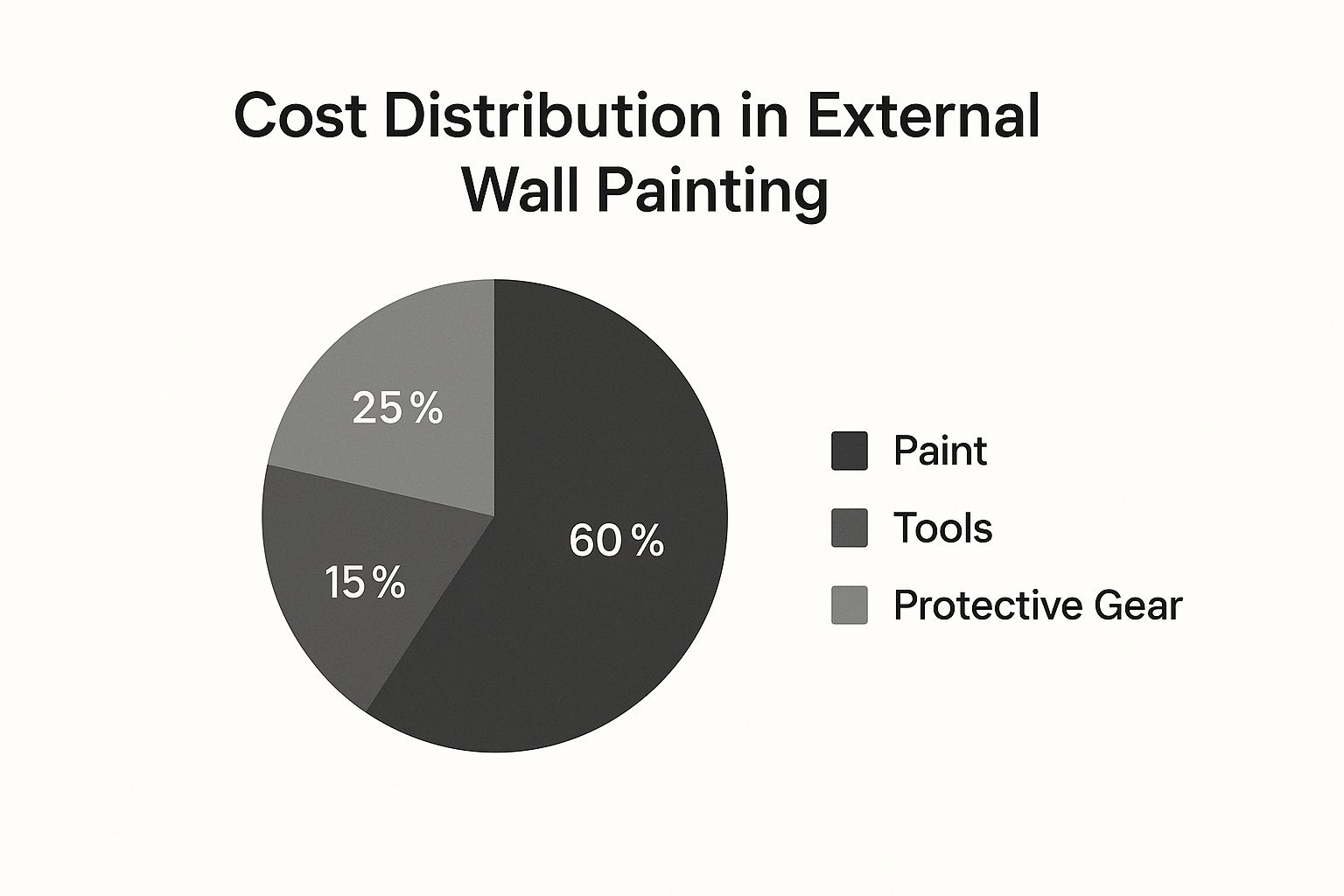
As you can see, cutting corners on the quality of your paint is a false economy. A premium product costs more upfront, but it pays for itself in longevity and protection.
To help you weigh the pros and cons, here’s a quick comparison of the most common paint types you’ll encounter.
Comparing Exterior Masonry Paint Types
Choosing the right paint isn't just a matter of preference; it's about matching the product to your property's specific needs. The surface type, age of the building, and desired finish all play a part. This table breaks down the key differences to help homeowners in the West Midlands make an informed decision.
Paint Type | Key Benefit | Best For | Considerations |
|---|---|---|---|
Smooth Masonry | Clean, modern finish; easy to clean | Rendered surfaces, modern homes, uniform appearance | Shows surface imperfections more easily |
Textured Masonry | Hides hairline cracks and minor flaws | Uneven surfaces, older render needing a refresh | Can be harder to clean; texture traps more dirt |
Pliolite®-based | Can be applied in colder/damper conditions | All-season application; quick-drying needs | Strong solvent smell; can't be applied over old paint |
Limewash | Highly breathable; traditional aesthetic | Period properties, lime render, old stone | Needs reapplication more frequently; limited colours |
Ultimately, the best paint is one that provides the right balance of aesthetics, durability, and compatibility with your home's construction.
The Rise of High-Performance Paints
You might have noticed that paints seem to be getting better and better, and you’d be right. The UK paints and coatings market is booming, expected to grow from £2.18 billion in 2023 to £2.70 billion by 2029. A big reason for this is the development of advanced acrylic resins. These formulas offer fantastic weather resistance and flexibility, meaning they are far less likely to crack as your home naturally shifts with temperature changes.
When you're getting quotes, don't be afraid to ask the contractor why they're recommending a particular brand or type of paint. A true professional will be able to explain their choice based on your home's age, the condition of the walls, and its exposure to sun and rain.
This commitment to quality materials is what separates a quick touch-up from a proper, long-lasting exterior renovation. It’s not just about the topcoat, either. The right primers and sealants are just as important for ensuring the paint sticks properly and old stains don’t bleed through. For more practical advice on getting the details right, have a look at our 8 essential painting and decorating tips for home renovation in the West Midlands.
Picking Your Colours and Sheens
Finally, the fun part! Choosing a colour and sheen that complements your home’s style. While your personal taste is what matters most, it’s worth taking a moment to consider the character of your property and the surrounding area. Traditional brick homes often look wonderful in classic reds or earthy, muted tones, whereas a modern rendered house can handle a bolder, more contemporary palette.
The sheen, or finish, also makes a big impact:
Matt: A completely flat, non-reflective finish. It's fantastic for hiding small bumps and imperfections on the surface.
Satin: This has a soft, low-level sheen. It’s a great all-rounder, offering more durability and washability than a matt finish without being overly shiny.
Taking the time to choose your colour and finish thoughtfully won't just improve your home's kerb appeal—it will ensure you’re happy every time you pull into the driveway for years to come.
Why Great Paint Jobs Start Long Before a Brush is Dipped
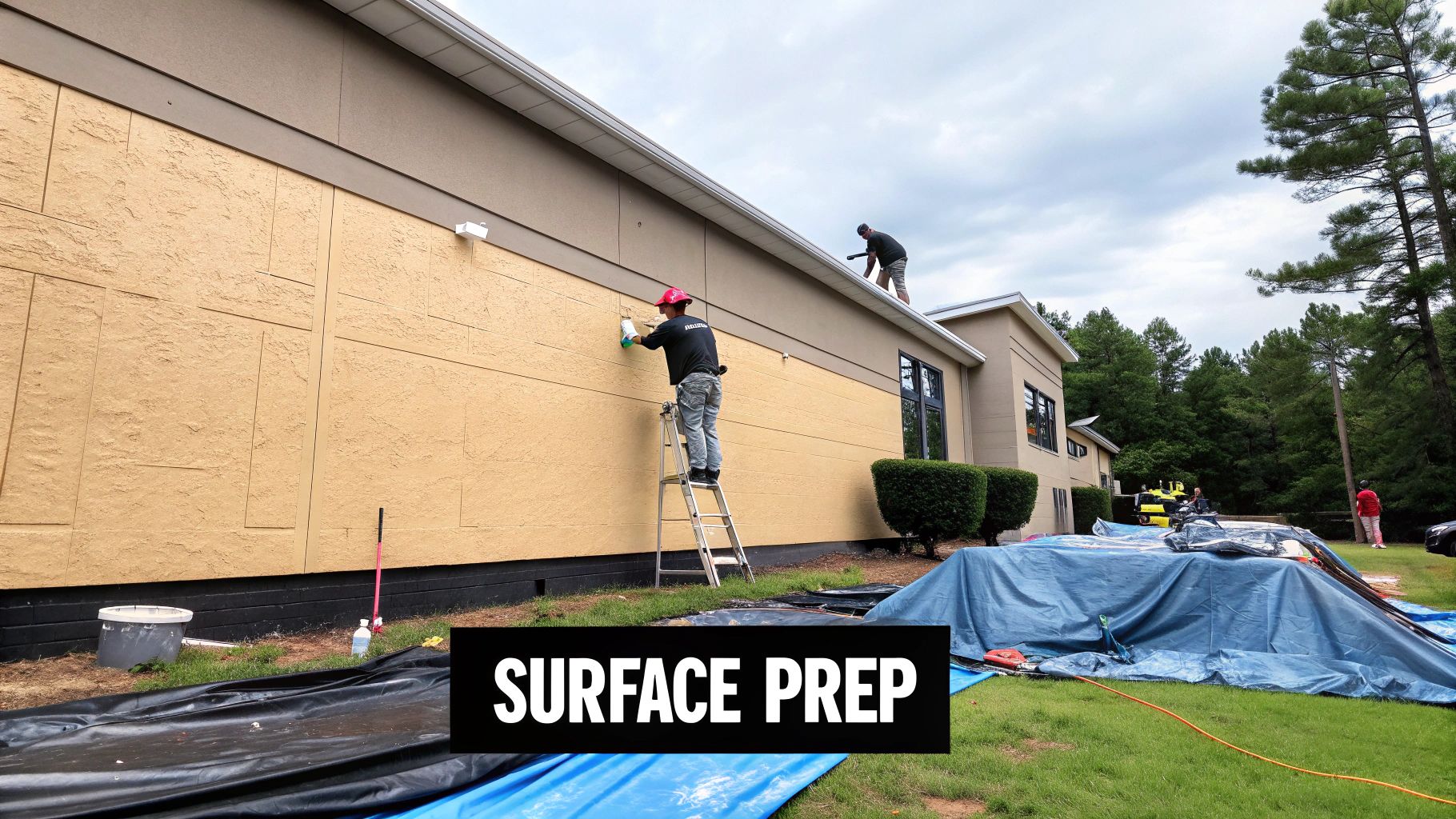
Here’s a truth every seasoned painter knows: you can have the best, most expensive masonry paint on the market, but if you apply it to a poorly prepped wall, you’re just wasting your money. The finish will inevitably fail.
This is the unglamorous but absolutely vital part of the job. It's where real expertise shines through, creating a solid foundation that will stand up to the worst of the West Midlands weather for years to come. Rushing this stage is the biggest mistake you can make with any external wall painting project. It's like fitting a brand-new kitchen on a rotten floor; it won't be long before the underlying problems ruin your investment.
First, A Proper Inspection and Clean
Every professional job kicks off with a detailed walk-around. A trained eye can spot things that are easy to miss, like hairline cracks hiding in the render, faint signs of damp near the ground, or old, flaky paint that’s just waiting to peel off. This assessment sets the strategy for everything that follows.
Once we know what we're dealing with, the real work begins with a deep clean. Your exterior walls have spent years collecting a film of dirt, traffic fumes, green algae, and lichen. If you just paint over that, the new coat has nothing solid to grip onto, which leads straight to blistering and peeling.
For most homes, a professional pressure wash is the only way to go. It's the quickest and most effective method for blasting away built-up grime and organic growth, getting you back to the true surface underneath. This step alone makes a massive difference to how well the new paint will bond.
A clean, sound surface is the canvas for a great paint job. Without it, you are simply covering up problems that will reappear—often sooner rather than later, and with bigger repair bills attached.
This thorough cleaning is essential, but it’s also important to fix any sources of moisture. Damp issues can sometimes start from the top, so checking that your roof and gutters are in good shape is a smart move. In fact, you can learn more about the importance of quality roofing in our detailed guide.
Getting Hands-On: Repairs and Making Good
With the walls stripped clean, every little imperfection is suddenly on full display. This is where a good handyman service proves its worth. We don’t just paint over the cracks; we fix them properly to create a perfectly smooth, stable surface ready for the paint.
This repair phase can involve several key tasks:
Filling Cracks: Even tiny cracks let water in. We rake them out, clean them, and fill them using a high-quality, flexible exterior filler that can move with the building.
Repairing Render: Any 'blown' or hollow-sounding render gets chipped away back to a solid base. We then patch it with new render, carefully blending it to match the existing texture.
Treating Algae: For stubborn patches of green, we apply a fungicidal wash after cleaning. This kills off any leftover spores and stops them from growing back through the new paint.
Think about a classic pebbledash house, a common sight across the region. A handyman in Dudley tackling that job would first have to remove any loose pebbles and expertly patch up any bare spots to match the surrounding texture. Only then would they even think about opening a tin of paint. It’s that level of detail that separates a professional finish from an amateur one.
The Foundation for a Lasting Finish
This commitment to preparation is precisely why a professional paint job looks better and lasts so much longer. It's a fundamental part of any house renovation in Wolverhampton, making sure the outside of the building is as sound as the new bathroom or flooring inside.
The UK's paint and woodcare market, valued at around £925 million back in 2020, has seen a huge push towards high-performance products, and that includes the primers and fillers we use. Top brands have invested millions in developing systems that give incredible adhesion. On a well-prepared surface, some premium paints can achieve a spreading rate of over 17m² per litre.
At the end of the day, all those hours spent cleaning, scraping, filling, and sanding are what guarantee your home will look pristine and stay protected for a decade or more. That’s what delivers real value for money and a job you can be proud of.
Professional Application for a Flawless Result
With a perfectly prepped surface ready to go, we move on to the stage where real craftsmanship makes all the difference. Applying paint is more than just slapping it on; it’s a delicate balance of using the right tools and techniques to get that uniform, streak-free finish that so many DIY jobs just can't seem to achieve.
The real distinction between a professional and an amateur job isn't just how it looks on day one, but how it holds up over time. A huge part of that comes down to choosing the right application method. This isn't a one-size-fits-all decision—the property itself tells you the best way forward. A seasoned team knows exactly when to reach for a brush, when a roller is the right call, and when a sprayer will deliver the best results.
Choosing the Right Tools for the Job
Every tool in our kit has a specific job, and knowing which one to use is essential for both getting the job done efficiently and achieving a top-quality finish.
Brushes: These are absolutely vital for all the detail work. We use high-quality brushes for "cutting in"—creating those incredibly crisp, sharp lines around windows, doors, fascias, and soffits.
Rollers: The workhorse for any large, flat surface. For a modern home with smooth render, a good medium-pile roller is perfect for providing excellent, even coverage.
Sprayers: When you're up against difficult or highly textured surfaces, a paint sprayer is often the only sensible choice. It forces the paint into every tiny nook and cranny, ensuring complete protection.
Think about it this way: trying to paint a rough-textured brick exterior on a period house renovation in Wolverhampton with just a roller would be a nightmare. It would take forever, and you'd never get a consistent coat. An airless sprayer, on the other hand, gives you a flawless, even coat and gets into all the recessed mortar joints—a task that's practically impossible otherwise.
The secret to a perfect finish isn't just applying paint, but applying it with the right tool for the specific surface. This ensures even coverage, proper adhesion, and a result that stands the test of time and weather.
The Art of Application and Clean Lines
One of the most obvious giveaways of a professional external wall painting job is the precision of the lines. This technique, which we call 'cutting in', is all done by hand with a quality angled brush and a very steady hand. It’s what creates that sharp, clean separation between the wall colour and your window frames or trim.
This painstaking detail is what elevates a project from just being 'painted' to being 'professionally finished'. It's a skill that takes years of practice and patience, and it's a non-negotiable part of the service for any reputable painter. A sloppy cut-in line can make the entire job look messy, completely undermining all that hard prep work. If you're weighing your options, our guide on [DIY vs. professional services can help you decide when to call in an expert](https://www.romaintenance.co.uk/post/diy-vs-professional-when-to-call-a-house-repair-expert).
Coats, Curing, and Long-Term Durability
Finally, getting a durable and vibrant finish all comes down to applying the right number of coats and—just as importantly—allowing proper drying time between them. It’s always tempting to rush this part, but that's a critical mistake that can ruin a job.
Most professional masonry paints need a minimum of two coats. The first coat essentially acts as a primer, sealing the wall and creating a solid base for what’s to come. The second coat is what delivers the true, rich colour and the main protective layer against the elements. On occasion, especially with a dramatic colour change or a very porous surface, a third coat might be needed to get things perfect.
Equally important is the drying (or 'curing') time. Paint needs time to properly harden and bond to the surface. If you apply a second coat too soon, you can trap moisture underneath, which almost always leads to blistering and peeling within a few months. We are meticulous about following the manufacturer's recommendations; it's crucial for the paint to perform as designed and for any warranty to remain valid. This patient, methodical approach is a true hallmark of quality work and ensures your investment is protected for years to come.
Hiring a Trusted Painter in the West Midlands
Choosing the right painter is every bit as crucial as picking the perfect paint colour. After all, the quality of the finish and how long it lasts rests entirely in their hands. For a job as big as an external wall painting project, you absolutely need a partner you can trust to deliver a professional result that protects your home and boosts its kerb appeal.
Finding that reliable professional can feel like looking for a needle in a haystack, but if you know what to look for, you can navigate the process with confidence. Here's how to find a trustworthy local expert in the West Midlands and ensure your home is in good hands.
Understanding Project Costs and Timelines
The first question on everyone's mind is, "How much is this going to cost?" The truth is, there's no simple answer. Several key factors come into play that can dramatically influence the final price of an exterior painting job.
A good contractor will always break this down for you in a detailed quote, but it really helps to understand what's driving the cost from the outset.
Property Size and Complexity: It sounds obvious, but a large detached house with multiple storeys or fiddly architectural details will take more time and materials than a straightforward bungalow.
Surface Condition: Are your walls in rough shape? If they need a lot of prep work, like patching render or filling dozens of cracks, that labour will add to the overall cost.
Access Requirements: This is a big one. If the team needs scaffolding to safely reach upper levels, it’s a significant cost that has to be factored into any legitimate quote.
Timelines can vary just as much. A simple job on a modern semi might take a week in good weather. On the other hand, a large, detached period property needing serious repairs could easily take much longer. Any professional painter worth their salt will give you a realistic schedule based on the actual work involved.
What to Look for in a Quote
A quote is much more than just a number; it’s a reflection of a company's professionalism. A vague, one-line price scrawled on the back of a business card is a massive red flag. What you want is a detailed, transparent quotation—that’s the mark of a contractor who knows their business and respects yours.
A proper quote should clearly itemise:
The cost of all labour.
The specific brand and type of paint and primer they plan to use.
The cost of all materials, from fillers to cleaning agents.
The cost of hiring scaffolding or any other access equipment.
An estimate for responsible waste disposal.
Clear information on VAT.
A comprehensive quote prevents nasty surprises down the line. If a price seems too good to be true, it probably is. It likely means critical steps like thorough preparation or quality materials have been cut to lower the cost.
It’s always wise to compare quotes from a few different painters, but make sure you’re comparing like for like. A cheaper quote might mean they're using inferior paint, rushing the prep work, or, worse, don't have the right insurance. This is one area where investing in quality really does pay off in the long run.
Essential Questions for Your Potential Painter
Before you sign on the dotted line, it's vital to ask some direct questions. This is your chance to properly vet their experience, professionalism, and whether they're the right fit for your home. Think of it as an interview for a very important job—because it is.
Here are a few key things you need to ask:
Are you fully insured? Ask to see proof of their Public Liability Insurance. This is non-negotiable. It protects you and your property if an accident happens.
Can you provide local references? A confident, established painter will be more than happy to share contact details of previous clients in the West Midlands.
Can I see a portfolio of your work? Look for examples of projects that are similar to your own home. It’s the single best way to judge the quality of their finish.
Who will actually be doing the work? Will it be the person you're speaking with, or will they be subcontracting it out?
What is your preparation process? They should be able to walk you through their steps for cleaning, repairing, and priming the surfaces with absolute confidence.
The Value of Local Expertise and Reliability
There's a real advantage to hiring a local team, whether it's a trusted handyman in Dudley or a house renovation Wolverhampton specialist. They have a reputation to uphold in the community and a genuine understanding of the local housing styles and the challenges posed by the British weather.
Their work is their business card, and keeping customers happy is the key to their success. When you hire a firm like ours, you're not just getting painters. You're getting a multi-skilled team that can handle everything from small handyman jobs to complete renovations, including kitchen fitting and bathroom renovation. That broad expertise means if we find an underlying issue during the prep stage, we can fix it properly. We’ve seen firsthand how a well-managed full renovation, anchored by a quality paint job, can completely transform a property.
Ultimately, taking the time to find the right professional is the most important part of your painting project. Verifying credentials, checking their work, and ensuring they are properly licensed is crucial. For more on this, we suggest reading our post on the importance of hiring licensed contractors for UK construction projects. Investing that time upfront will be rewarded with a beautiful, durable finish you can be proud of for years to come.
Got Questions About Painting Your House Exterior? We’ve Got Answers.
Thinking about painting the outside of your house? It’s a big job, and it’s natural to have a few questions swirling around. As a team that’s been doing everything from small handyman jobs to full-scale property renovations across the West Midlands, we've pretty much heard it all.
Let's clear up some of the most common queries we get from homeowners, so you can move forward with confidence.
How Often Should I Be Repainting My External Walls?
For a professional job using quality masonry paint, you should expect it to last anywhere from 5 to 10 years here in the UK. What makes the difference between five years and ten? A few things. The biggest factors are how exposed your home is to the elements, the type of surface we're painting, and, crucially, how well the surface was prepared in the first place.
A house on a windy hill, for example, will take a much bigger beating from the weather and might need a fresh coat closer to the 5-year mark. On the other hand, a more sheltered property could easily last a full decade. The best advice is to keep an eye on it. If you start seeing signs of cracking, flaking, or peeling paint, that’s your cue to start planning a repaint.
Can You Actually Paint Over Pebbledash or Textured Render?
Yes, you certainly can! In fact, painting over old pebbledash or a dated textured render is one of the most popular ways to give a home a modern facelift. It’s not as simple as just slapping a roller on it, though—that's a recipe for a patchy, amateur-looking job.
To get a really professional finish on a surface like pebbledash, you need to work the paint right into all those nooks and crannies. We typically use a combination of a very long-pile roller and sometimes even a sprayer. This forces the paint into the texture, ensuring a solid, uniform colour and proper protection.
Before a single drop of paint goes on, the wall has to be meticulously cleaned to get rid of any grime, moss, or loose stones. This is non-negotiable. It gives the new paint a solid foundation to stick to, which is the secret to a finish that lasts.
When Is The Best Time of Year to Paint Outside?
Timing is absolutely critical for a successful exterior paint job. In the West Midlands, your best bet is to find a good spell of dry, mild weather. This usually means we're looking at the window from late spring through to early autumn – think April to September.
You really need a solid block of dry days for the whole process:
The Prep: Walls have to be bone dry before you can even think about doing repairs or applying a primer.
The Painting: The paint itself needs the right conditions to be applied and to bond properly with the wall.
The Curing: Each coat needs to dry completely before the next one goes on. If you rush it, you trap moisture underneath, which is what causes those ugly bubbles and blisters later on.
Trying to paint when it’s below 5°C is a bad idea; the paint just won’t cure correctly. Likewise, painting in the blazing sun can cause it to dry too fast, leaving you with a patchy finish. Any good professional will be watching the weather forecast like a hawk.
Do I Need Planning Permission Just to Paint My House?
For most homes, the answer is no. Painting your exterior is usually considered 'permitted development', so you don't need to ask for planning permission and can generally pick whatever colour you fancy.
However, there’s a big "but" here. If your property is a listed building or sits within a designated Conservation Area or National Park, the rules are completely different. There will be very strict regulations about any changes to the exterior, and that absolutely includes the colour. In these cases, you must consult your local planning authority before you start any work. Don’t skip this step, as it can lead to some hefty penalties.
At Ro Maintenance Ltd, we're experts in all aspects of property care, from painting and decorating to complete kitchen and bathroom renovations. Whether you're planning a full house renovation in Wolverhampton or just need a reliable handyman in Dudley, our team delivers quality craftsmanship you can rely on.
Ready to give your home a fresh new look? Contact Ro Maintenance Ltd for a free, no-obligation quote today!
Article created using [Outrank](https://outrank.so)


Comments